

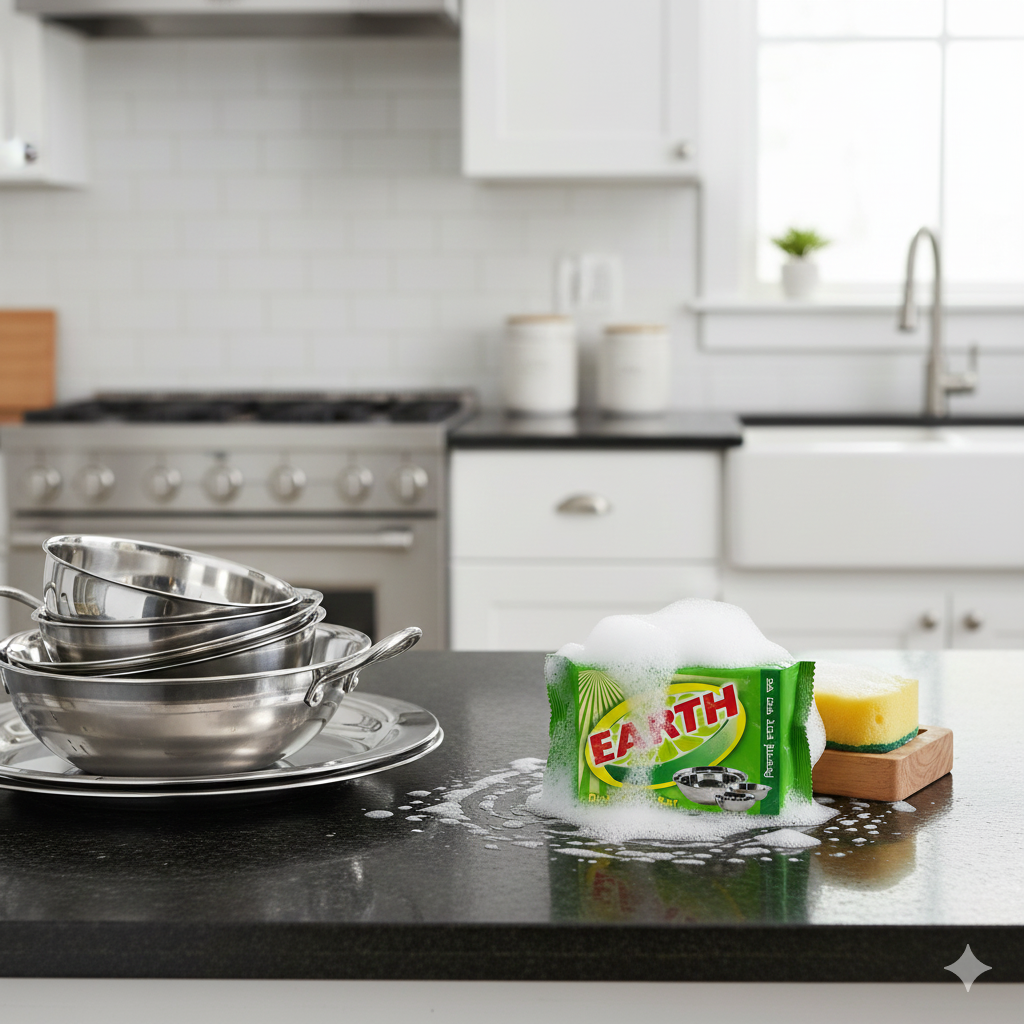
In most Indian households, dishwashing is an everyday ritual, and choosing the right cleaning product makes a big difference in cleanliness, convenience, and cost. While dishwashing liquids have become increasingly popular over the past few years, dish wash bars still hold a strong and trusted position in Indian kitchens. Many families prefer bars because they provide effective cleaning at an affordable price, especially for utensils that face tough Indian-style cooking. From oily tadka to masala stains, the challenges in Indian kitchens are unique, and dish wash bars are specifically designed to tackle them effortlessly. Their thick texture, strong grease-cutting power, and long-lasting usage make them a practical choice for homes across the country.
One of the biggest reasons dish wash bars outperform liquids in Indian kitchens is their ability to remove stubborn grease. Indian cooking involves deep frying, repeated oil use, masala-rich preparations, and heavy stainless-steel utensils. These types of stains are difficult to clean with diluted liquids, which often require more quantity to achieve the same result. A dish wash bar, on the other hand, offers a firm and concentrated formula that directly targets thick oil layers. When rubbed over a scrubber, the bar produces a rich lather that lifts sticky grease easily, without requiring excessive effort or repeated scrubbing. This makes dish wash bars more effective and efficient, especially in households where daily cooking includes oily and spicy foods.
Another major advantage of dish wash bars is affordability. In India, where budgets matter in everyday household decisions, bars provide excellent value for money. A single bar lasts longer than most liquid bottles because it does not get wasted during use. Dishwashing liquids are often overpoured, get diluted quickly when mixed with water, or slip off wet sponges without being fully utilized. Bars, on the other hand, maintain their solid shape and dissolve slowly, allowing families to use them for weeks at a time. This cost-effectiveness makes dish wash bars ideal for large families, shared homes, and households that cook multiple meals a day.
In addition to being budget-friendly, dish wash bars offer excellent control during application. With liquids, it is difficult to measure the right amount needed for one round of washing, and most people end up using more than necessary. Dish wash bars allow you to pick exactly how much product you need by simply rubbing your scrubber on the bar. This reduces wastage and helps maintain consistency in cleaning. Bars also stick well to scrub pads, ensuring that the detergent stays in one place and doesn’t drip or spread unnecessarily. This controlled usage is particularly convenient in busy Indian kitchens, where speed and efficiency matter.
Storage is another benefit that makes dish wash bars suitable for Indian households. Most kitchens in India have compact sink spaces, and dish wash bars fit neatly in small holders or soap cases, keeping the washing area clean and organized. Liquid bottles, especially larger ones, often take up extra space, become slippery with water, and sometimes leak around the cap. Dish wash bars, when stored properly, stay firm and ready to use. Modern dishwash bars—like Suchak Chemicals’ Earth Dish Wash Bar—are designed with anti-melt and anti-break formulations that help them last longer, even when exposed to water frequently. This durability makes them a practical option for Indian homes where dishwashing happens multiple times a day.
From an environmental perspective, dish wash bars also take the lead. They typically use less plastic packaging compared to liquid detergents that come in bottles. In a world where sustainability is becoming increasingly important, switching to products with minimal packaging can make a positive impact. Dishwash bars are usually wrapped in simple paper or thin wrappers, reducing plastic waste and supporting eco-friendly household habits. Many modern bars are also formulated with biodegradable ingredients that are gentle on the hands while still providing strong cleaning performance.
Dish wash bars also offer superior cleaning for traditional Indian utensils like aluminium kadais, iron tavas, pressure cookers, and stainless-steel plates. These surfaces often accumulate burnt food, sticky residues, and heavy grease. The firm scrubbing motion used with a bar helps loosen tough stains more effectively than diluted liquid does. In many households, bars are preferred because they make it easier to clean ridged utensils like steel strainers, pressure cooker lids, and large pots used for boiling milk. Their strong cleansing action ensures that utensils come out sparkling without the need for repeated washes.
Many Indian families also appreciate the familiar feel of using a dish wash bar. It is easy to handle, works well with traditional steel scrubbers, and requires no special technique. For generations, bars have been a trusted choice, and even as lifestyles evolve, their convenience and effectiveness continue to make them relevant. With modern advancements, today’s dish wash bars are gentler on the skin and enriched with fragrances like lemon and neem, offering both freshness and hygiene in every wash.
In conclusion, while dishwashing liquids may seem modern and convenient, dish wash bars remain the superior choice for Indian kitchens due to their strong grease-cutting power, affordability, long-lasting use, and effective cleaning performance. They deliver excellent results even on the toughest masala and oil stains, making them ideal for daily Indian cooking. With eco-friendly packaging, controlled usage, and compatibility with traditional utensils, dish wash bars offer unmatched value and practicality. As long as Indian households continue to enjoy flavorful, oil-rich food, dish wash bars will remain a trusted companion in keeping utensils clean, hygienic, and fresh.